Saturday, August 14, 2010

Review: Abominations

Rebecca Brock, RLB, 2007

I should begin with a word of explanation as to why I'm reviewing a self-published collection here, which - according to NecroScope's official guidelines - is something to be avoided. So here it is:

Rebecca Brock gives good zombie.

Having recently read two cracking zombie tales by Brock - 'Night Shift' (The Best of All Flesh) and 'Junebug' (History is Dead) - I felt that even a self-published collection of this author's work was likely to be a reasonably safe investment. And I'm pleased to report that my hunch proved correct.

Abominations collects eleven short fiction reprints - most, though not all of them, zombie-related - plus one novel excerpt. All are engaging and entertaining, and Brock displays a keen understanding of the human condition (including aspects that we might prefer not to address). Also, in a genre where we've come to expect 'sharp shock' endings, Brock is refreshingly skilled at the 'deceptively soft' ending; we see the inevitable approaching from a fair distance, but Brock's understated concluding lines impart a sense of disquiet that remains long after the book is laid aside.

To sum up, I really enjoyed Abominations. True, the publication could have done with some more attention to formatting and editing (which is something even professional presses overlook occasionally); but, overall, this is an extremely enjoyable collection, and one that left me looking forward to reading more from Rebecca Brock.

Abominations is available through Amazon, in print or e-format. Go buy it. That is all.

Review: Dead or Alive

William Harms, Absolute Tyrant Publishers, 2010

Arizona 1889: two desperate brothers have pulled off a bloody stagecoach robbery, and think their troubled past is behind them. But a horror from the region's tribal past has been unearthed, and - as a terrifying sickness sweeps through the local township - the Smith brothers find themselves fighting for their lives against against a horde of the hungry dead...

Dead or Alive is the debut novel of William Harms, whose previous publishing credits include the acclaimed vampire-themed graphic novel, Impaler. There's quite a bit to like about Dead or Alive: the characters are all well-realised (if generally unlikeable), and the plot trots along at a good pace. Oh, and there's plenty of brutal zombie action for the gorehounds. My only gripe is that Harm's obvious talent for dialogue doesn't extend to the prose (which is pretty turgid in places). If you can get past this, however, then Dead or Alive offers a fun, by-the-numbers, zombie/western romp that should appeal to zombie obsessives. And possibly cowboys.

Monday, August 9, 2010

Review: Feed

Mira Grant, 2010, Orbit Books

2014: We had cured cancer and the common cold, but in doing so created something far worse. The infection spread, taking over minds and bodies with one, unstoppable command: Feed.

2040: Bloggers Georgia and Shaun Mason have hit the big time, reporting from the campaign trail of a Presidential hopeful. But in a world where the dead walk and kill, nothing is ever safe or certain. As the Masons begin to uncover more and more evidence of a dark conspiracy behind the Infected, it seems less and less likely that either of them will survive to get the truth out.

In Feed (Book #1 of the Newsflesh Trilogy), Mira Grant has created not only one of the very best zombie novels I've ever had the pleasure to read, but also one of the very best Social SF novels I've ever read, taking the global zombie uprising as a starting point and extrapolating a fascinating and effortlessly believable post-apocalyptic society, with much invaluable back story and cultural info provided through the eyes of the central character. The plot itself is deceptively simple and linear (yet thoroughly enjoyable), which allows the reader still more opportunity to take a look around the strange new world of 2040, secure in the knowledge that nothing truly shocking or dreadful is likely to occur...

I use the word 'deceptively' advisedly, folks.

Feed is a page-turner of the highest order, which hits the reader (emotionally speaking) like a tonne of bricks when their defences are down. A must-read for all fans of horror, SF, and anything in-between.

Saturday, August 7, 2010

News: Zombie Article Garners Award Nomination

The fandom-based Australian Science Fiction Awards, commonly referred to as the Ditmar Awards, recognise excellence in SF, Fantasy and Horror by Australians. Each year, the Australian National SF Convention presents the Ditmar Awards for the previous calendar year.

This year's Ditmars will be presented at Aussiecon4 (the 68th World Science Fiction Convention). Included among the shortlisted nominees is NecroScope's own Keeper of the Dead, Chuck McKenzie, with one nomination for Best Fan Writer for his reviews on our parent site HorrorScope, and one for the William Atheling Jr Award for Criticism for his article 'The Dead Walk!...Into A Bookshop Near You', published in Brimstone Press' Eye of Fire ezine.

As this article examines in depth the recent and ongoing boom in zombie literature, we present a link to the ezine for our readers.

Tuesday, August 3, 2010

Interview: Jonathan Maberry

Roving zombophile Scott Wilson is at it again, this time talking mutants, comics, and horror in general with Jonathan Maberry, perhaps (deservedly) the biggest name in zombie fiction today. Check out the interview on the official AHWA site via the link below.

Monday, August 2, 2010

Interview: David Moody

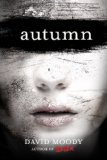
David Moody is a name that should be familiar to most zombophiles, David being the author of the acclaimed Autumn series, as well as Hater, and other zombie-related work. Scott Wilson, Executive Editor of Midnight Echo (the offical Magazine of the Australian Horror Writers' Association), recently posted an interview with Moody over at the AHWA site, wherein all manner of disturbing stuff was discussed.

To read the interview, follow this link:

Review: The Zombie Combat Manual

Roger Ma, 2010, Penguin Australia

When the bombs stop falling, when your ammunition runs out, when the dead are still attacking the living...will you be ready?

The Zombie Combat Manual, as the title suggests, is yet another entry into the increasingly-popular 'zombie guide' subgenre (along with such titles as Max Brooks' uber-serious The Zombie Survival Guide, and David P. Murphy's satirical Zombies for Zombies). It's also one of the best such guides I've ever read, striking exactly the right balance between providing serious information on how to protect oneself against the walking dead, and entertaining the reader (an aspect often lacking in other 'serious' guides). This is not to suggest that TZCM is a humorous, or even particularly light read; highly detailed chapters on combat techniques, choice of weapons, exercise regimens, and identifying the relative strengths and weaknesses of zombies are intercut with informative and occasionally quite moving 'survivor interviews' that serve to illustrate the points being made in the instructional text, as well as to break up large sections of dry (though still fascinating) information.

To say that author Ma has put a great deal of thought and effort into this manual is to severely undersell the publication: the book covers not only the obvious aspects of defending oneself in a post-Rising world (such as exactly where to hit 'em with that baseball bat), but also such things as survivor diets (being fatter has unexpected advantages), psychological issues (expose your kids early for maximum toughness), and the dangers of relying upon standard combat techniques (martial arts have little effect upon a foe who feels no pain).

The Zombie Combat Manual is a tome that every zombie fan should own (particularly if you're into the whole 'zombie survivalist' movement), and is bound to become regarded as a classic of the subgenre. Grab a copy now, before things get ugly out there.

News: Dymocks Southland Bestselling Zombie Titles for July 2010

Dymocks Southland is a general bookshop, located in Victoria, Australia, that boasts a great range of international zombie fiction due to the predilections of several of the staff. Below are listed the Top 10 biggest-selling zombie titles for July 2010.

1. The Zombie Survival Guide - Max Brooks
2. Patient Zero (Joe Ledger #1) - Jonathan Maberry
3. Pride & Prejudice & Zombies - Austen / Graeme-Smith
4. The Zombie Survival Guide: Recorded Attacks - Max Brooks
5. Xombies - Walter Greatshell
6. Valley of the Dead - Kim Paffenroth
7. Ex-Heroes - Peter Clines
8. World War Z - Max Brooks
9. I Am Scrooge - Adam Roberts
10. Cell - Stephen King

Tuesday, July 27, 2010

Pop Culture: Ford Launches World's First Zombie-Proof Car

Ford is cashing in on the popularity of zombies with this neat ad...

Thursday, July 22, 2010

News: Brisbane Zombie Walk set for October

This year's Brisbane Zombie Walk will be held on October 24.

Last year, up to 5,000 zombies shambled through the CBD. It was a hell of a day.

Organisers hope this year's walk will be just as popular, and that as many participants as possible chip in some dough for the Brain Foundation.

Check out coverage of last year's lurch here and here, then head on over to the Brisbane Zombie Walk site to register.

Monday, July 19, 2010

Review: The Living Dead 2

Ed. John Joseph Adams, 2010, Night Shade Books

About a year back, I reviewed Night Shade's The Living Dead, and proclaimed it the best zombie anthology I'd ever read (HorrorScope review here). Well, there's a new anthology due in September that actually surpasses The Living Dead - and it's The Living Dead 2!

I just want to take a moment to emphasise what an amazing achievement this is: where the original anthology comprised reprints of classic zombie tales, thereby guaranteeing a top-quality publication, The Living Dead 2 includes only original and recently-published work. Editor John Joseph Adams (who also compiled The Living Dead) demonstrates a brilliant understanding of exactly what makes a damn fine zombie tale, and deserves major kudos for the same.

As with its predecessor, TLD2 includes contributions from a veritable Who's Who of zombie fiction, including Robert Kirkman, Cherie Priest, Mira Grant, David Wellington, Jonathan Maberry, Carrie Ryan and John Skipp, among many, many others. The tales cover a range of themes, with plenty of new takes on familiar tropes, and all are of a standard that prevents me from singling out any particular favourites.

Having said that, I must make mention of one particular tale - S. G. Browne's 'Zombie Gigolo' - which, in a subgenre that has become progressively darker and more serious over the past few years, provides a joyfully disgusting reminder that zombies can sometimes just be fun. A warning, though: this story is far, far sicker than it sounds.

There is absolutely no doubt in my mind that The Living Dead 2, and all who contributed to her, will be be well-represented across the various genre literature awards over the next year. In the meantime, zombie afficianados should place this publication at the very top of their Want List, above firearms, bottled water, and chainsaws.

Monday, July 12, 2010

Review: How to be a Zombie

Serena Valentino, Scribo Australia, 2010

So, you've just been zombified, huh? Finding yourself slowing down? Beginning to smell ripe? Craving brains?

Here, then, is the book for you: How to be a Zombie seeks to inform and educate the newly undead on the peculiarities of their condition (in much the same way as David P. Murphy's excellent Zombies for Zombies). There are entries on the many different types of zombie (as depicted in numerous movies), zombie anatomy and behaviour, and causes of zombification, as well as handy tips on 'alternative' foods, makeup (for both zombies wanting to pass as human, and humans wanting to pass as zombies), social etiquette, holidays, music, must-read books, and the pros and cons of zombifying your pets.

Despite mostly taking a tongue-in-cheek approach, How to be a Zombie is nonetheless a genuinely valuable resource for any biotically-challenged individual trying to make their way in the world (or even for living folk with zombie obsessions). Fun, highly detailed, and lavishly (and gorily) illustrated throughout, How to be a Zombie is a book that dead people and zombie survivalists alike should read, if not own.

Thursday, July 8, 2010

Review: We're Alive

‘We’re Alive’ is a zombie survival podcast drama. The first season is 12 episodes long, most separated into 3 parts. It follows the story of Michael, a former sergeant in the US army, with what is left of his unit: Angel, an officer with no combat experience, and Saul, a man who is more than he seems.

It begins with a strange riot and a call to meet up at the base. By the time the characters get there, they know something is up. After a close encounter with the zombs, they decide to find a place to create a sustainable defence and look for survivors.

From the first episodes, your breath catches in your throat. The drama is intensified by both the action and the immediacy of the medium. While the plot would be captivating in any type of text, the first person voice acting makes it all so much closer.

Part of its effectiveness comes from the high quality of production, including sound effects and actors. There are quite a range of voice actors, all in control of the tone and effect of their voice to have the maximum impact. Without any visual or descriptions, the voices are all we have for connecting to the character, and the cast of ‘We’re Alive’ do this perfectly.

Apart from the dialogue, there are also character asides which help to create the setting.

There is so much more within the plot than simple survival. The twists and turns have you constantly guessing, and there is more than death to worry about. The final episodes are horribly shocking and completely irresistible. There is not a second of the podcast you should miss.

Of all the zombie stories, of all the various mediums available for narrative, this is one of the best and most effective. Every tremble in sound for something you can’t see is a moment of terror. ‘We’re Alive’ is beyond clichés, and a thrilling ride through the zombie apocalypse.

'We’re Alive' can be download on Zune, iTunes, and for download or streaming at the website. You can also have it sent directly to your iPhone or BlackBerry.
The second season is coming out in August 2010.

Monday, July 5, 2010

Review: The Complete Idiot's Guide to Zombies

Nathan Robert Brown, Penguin Australia, 2010

Information manuals of the type published under both the Complete Idiot's Guide and For Dummies imprints tend to be a mixed bag. The best of these guides typically assume that the reader knows exactly nothing about the topic, and therefore cover in great detail every last snippet of information pertaining to that subject. This is obviously a boon for readers who genuinely know little about the topic, but is ideally also of interest to those with more expertise, as the encyclopedic nature of the guide ensures that any minor gaps in the expert's knowledge will be filled. Unfortunately, there are also guides that merely provide the most basic overview of a given topic, which means those with expertise will find little of interest therein, while those with patchy knowledge gain little than a passing insight into the topic, requiring them to seek out further references should they wish to gain a fuller understanding.

Unfortunately, The Complete Idiot's Guide to Zombies largely falls into the latter category. While the guide certainly scores points for attempting to document all aspects of the zombie phenomenon - from their origins in folklore and evolution through cinema, to their wholesale takeover of popular culture via comics, books, gaming and toys - the size of the publication (a mere 230-odd pages in A5 format) restricts the author to a fairly cursory examination of any of these aspects. To be fair, this guide does delve into several areas of zombie culture that I've not seen discussed in other 'serious' zombie references - such as the Zombie Survivalist movement - which in my book does make this guide worth reading. However, for a far more complete and satisfying examination of much of the material listed in The Complete Idiot's Guide to Zombies, I'd point enthusiasts to David Flint's Zombie Holocaust, Jonathan Maberry's Zombie CSU, or Bob Curran's Zombies: A Field Guide to the Walking Dead.

I should also mention that my intellectual investment in the guide was seriously undermined when, in the chapter entitled 'Zombies in Recent Literature', the author listed his own little-known (as far as I'm aware) series of zombie novels alongside a mere half-dozen other examples of zombie fiction, the other books listed all being seminal cult and/or blockbuster titles.

In a nutshell, The Complete Idiot's Guide to Zombies is worth a flick-through for obsessive fans of the walking dead, and - at around only AU$20 - is, at least, unlikely to leave too many readers feeling as though they've not received value for money.

Tuesday, June 15, 2010

Review: Kiss of Life

Daniel Waters, 2009, Simon & Schuster


In this, the sequel to Generation Dead (reviewed here), Waters once again tackles the various thorny issues arising in a world in which American teens have begun to rise from the dead. Kiss of Life is primarily a YA romance set against a rich backdrop in which the existence of zombies continues to polarise the community, and force changes (not always for the better) in politics, law, religion, and social machinations. The plot - which follows our schoolgirl protagonist Phoebe as she continues to fight for Undead rights, whilst pursuing romance with her (now dead) best friend, Adam - is tight, engrossing, and at times genuinely frightening in its all-too-credible examination of how the masses react when faced with unwanted realities.

With Kiss of Life carrying directly on from the events of Generation Dead, Waters wastes no time in jumping straight to the action, continually increasing the stakes as the novel progresses. The plotting and characterisation is spot on, the story satisfyingly mature and dark.

Kiss of Life is a terrific little page-turner that will leave you hungering for the next book in the series, and is available now from Australian retailers.

Review: Generation Dead

Daniel Waters, Simon & Schuster, 2008


All over the US, teenagers who die aren’t staying dead. And, as you might expect, people are divided on how to react. Some embrace this ‘second chance’ to be with their undead children. Others denounce these revenants as demonic portents of the apocalypse. Whatever the case, the undead are now a part of everyday life; they’re in our towns, our shops, our schools. And at Oakvale High, Goth-girl Phoebe’s obsession with Tommy, the new dead kid in class, will have consequences that nobody could ever have foreseen.

Generation Dead is a terrific little YA novel that credits its target audience with a fair bit of depth and intelligence. What begins as a deceptively light-hearted foray into the familiar territory of American high school culture – jocks and cheerleaders, freaks and geeks – quickly begins to delve into some very dark areas indeed, with themes of racial (or, in this case, biotic) and religious intolerance, grief, guilt, and various other unpleasant aspects of human nature coming to the fore. Nothing about this book is straightforward: the characters are complex and varied, with motivations that they themselves rarely understand, but with which readers will empathise, if not always sympathise; the plot twists and turns, defeating expectation at every turn. Even the ending – which I thought I could see coming a mile off – is brutally unexpected and downbeat, and guaranteed to leave the reader wanting to know: ‘but what happened next?’

Utterly absorbing and gripping from beginning to end, Generation Dead should appeal to most readers of darker fiction. I’ll look forward to reading the sequel.

Review: Gospel of the Living Dead

Baylor University Press, 2006, Kim Paffenroth


In 1968 a young Pittsburgh film-maker named George A. Romero released a horror film that would continue to influence the genre, delight moviegoers and critics alike, and redefine the zombie both as a monster and a symbol, for the next 40 years. That movie was, of course, Night of the Living Dead, which was followed by the loosely linked Dawn of the Dead (1978), Day of the Dead (1985), Land of the Dead (2005), and Diary of the Dead (2008).

Gospel of the Living Dead is an intriguing little nonfiction tome, released in the wake of the fourth Dead movie, which closely examines the themes explored by Romero. For such a slim book (195 pages, including 58 pages of appendix and index), there is a surprising amount of apparently well-researched, thoughtful and interesting material packed inside. Fans of Romero’s zombie films should already be familiar with the oft-discussed themes of rampant consumerism and human nature vs. survival; this book digs far deeper, examining such topics as religious philosophy (most notably comparing the entire Dead series to Dante’s Inferno), scientific responsibility, disease, war, humour, racism, sexism, and others, as well as looking at the influences upon Romero’s work and his influence upon the work of others.

The text in this book is well-presented, engaging, and eye-opening; this reviewer was certainly prompted, upon completing the book, to immediately re-watch the first four Dead films with new eyes, as it were. It was a quite wonderful experience, and I’d encourage any serious zombie fan with even the vaguest interest in the deeper meanings of the genre to go and order a copy of Gospel of the Living Dead for themselves. I’ll be interested to see if this book is re-issued with new material in the wake of the just-released Diary of the Dead.

Review: Roses of Blood on Barbwire Vines

D. L. Snell, Permuted Press, 2007


The zombie apocalypse has arrived, humankind has been devoured, and the scattered survivors eke out a meager existence amidst city ruins. But now the vampires have emerged from the shadows, seeking prey, and the remnants of humanity are further reduced to the level of cattle - lobotomized amputees bred solely for food…

To describe Roses of Blood as ‘disturbing’ seriously underplays the sheer brutality of this tale. From the very first page, the circumstances of the protagonists – both human and vampire – are depicted as utterly pointless and hopeless, not to mention violent and gory. Add to the mix a high level of erotic content and the author’s complete disregard for the well-being of any given character, and you’re guaranteed a highly unsettling read from beginning to end.

Snell has introduced some wonderfully fresh elements to the familiar backdrop of the zombie apocalypse, such as the vampires, and the origin of the undead (reanimated by lab-born parasites every bit as lethal as their hosts), all of which directly drive the narrative rather than simply providing set-dressing. The quality of Snell’s writing is also extremely high: this is horror written as high literature, with beautifully rich and flowing prose pulling the reader deep into the story. Having said that, the author’s fondness for similes as a substitute for functional description did start to wear after a while, but this was a minor quibble when compared to the novels’ many strengths.

If you’re fond of zombie fiction (or just horror fiction in general) this is certainly a novel worth reading, and one of the strongest small-press offerings I’ve read in quite some time. I’ll greatly look forward to future offerings from both Snell and Permuted Press.

Review: Day by Day Armageddon

J. L. Bourne, Permuted Press, 2007


If the title of this zombie-apocalypse tale sounds familiar, that’s probably because it's been doing the rounds for a few years now in various forms; first as an online journal, then as a print publication (which I believe has been revised at least once). Day by Day Armageddon also has a major cult following, being one of the earliest examples of the current crop of U.S. small-press zombie fiction to ‘make it big’ (comparatively).

The story is written in the form of a daily journal, penned by a survivor of the zombie outbreak who just happens to be a serving member of the U.S. military (as is the author), with knowledge of and access to weapons and various invaluable survival techniques. The narrative follows the nameless protagonist’s struggle to survive, and to find safe refuge from the undead for himself and a motley assortment of fellow survivors he collects along the way.

To be honest, I wasn’t at all convinced that I was going to enjoy this novel: apocalyptic tales in which the protagonist is a strong, capable type with a good grasp of what’s going on tend not to grab my interest so much. Give me a gibbering, ineffectual loser every time; it makes things more interesting.

However, as it turns out, I did enjoy the book. Sure, there’s nothing really new here, the plot almost wholly composed of elements that any zombie fan will be familiar with. However, it’s still a pretty good read if you don’t mind more of the same (and, given the popularity of the subgenre, I’m betting most readers who pick up this book won’t), and the military-man POV admittedly generates some interest. The author also manages to make his protagonist – who might well have come across as boringly invulnerable – sufficiently flawed and sympathetic to engage the average reader.

I did have two major issues with this publication, though. Firstly, it ends extremely abruptly, and I don’t mean in a ‘they all got eaten’ sort of way. This may have worked okay in the original blog format, where readers held no real expectations beyond the entry du jour, but unfortunately in novel form the result is extremely annoying, with no real climax to speak of, and no hint of possible future developments or sequels. Perhaps I’m expecting too much, but the lack of anything that could be called a proper conclusion left me extremely frustrated.

My second issue was with the editing of the book, or lack thereof. Although competently written, the text is rife with errors in spelling, grammar and punctuation – not to mention some extremely dodgy sentence construction – that kept making me want to whip out the red pencil and go to town. If I were feeling generous, I might suggest that the cruddy grammar lends the tale a certain realism; the journal has, after all, supposedly been written by an Average Joe, possibly with a fairly substandard grasp of the expectations of decent prose. But in the end, it was simply an annoyance that detracted from my enjoyment of the book.

This is a worthwhile addition to the private library if you really enjoy zombie fiction. Otherwise, I’d suggest Joe McKinney’s Dead City as a similarly-themed but more competently packaged substitute.

Review: History is Dead

Ed. Kim Paffenroth, Permuted Press, 2007


History is Dead is another in the ongoing series of zombie-themed anthologies from Permuted Press, a U.S. small-press publisher specialising in apocalyptic and zombie fiction. In this case, the theme of the anthology is historical settings; there are tales set in the days of the Wild West, the Black Plague and the Great Chicago Fire; there are zombie cavemen, zombie Vikings, zombie pirates and zombie samurai; there are tales involving William Shakespeare, Mary Shelley, Jack the Ripper, the Lone Ranger and Thomas Edison.

The twenty stories included within this anthology are mostly well-written and engaging. There’s nothing particularly thought-provoking or frightening here, it must be said, but almost all are extraordinarily fun to read. In particular, Leila Eadie’s ‘Society & Sickness’, written in the style of Jane Austen, and Jonathan Maberry’s ‘Pegleg and Paddy Save the World’, an over-the-top piece of clichéd Oirish tomfoolery, had me laughing out loud.

All in all this is an extremely worthwhile publication, and one I’d recommend to any zombie enthusiast. With Permuted Press’ anthologies consistently showcasing quality in content and production, I’ll certainly look forward to their next offering.

Review: Zombie Movies: the Ultimate Guide

Glenn Kay, Chicago Review Press, 2008


Zombie Movies: The Ultimate Guide is a fun little tome for any zombie enthusiast. While ‘ultimate’ may not be quite on the mark (there have been several similar publications in the recent past that offer a little more substance overall), at least the description of ‘guide’ is accurate; a fairly casual dip into the sub-genre, with emphasis on fun rather than serious discussion. The guide gives good general synopses and reviews for most of the chronologically-listed movies, and is certainly up-to-date, the final major review being for George A. Romero’s Diary of the Dead, released earlier in 2008. Also included are a number of interviews with ‘names’ from the world of zombie flicks, lists for Highest-Grossing and Greatest-Ever movies, and – intriguingly – a list of ‘Zombieless Zombie Movies’, plus a forward by Stuart Gordon.

The author consistently personalises the content with humorous comments and asides, as well as observations drawn from his own experiences as a ‘zombie movie extra’, all of which – for me - added to the enjoyment (although those preferring more serious discussion may find the authorial input intrusive). Definitely worth buying to complement, if not replace, your existing zombie movie references.

Review: Bone Song

John Meaney, 2007, Gollancz


Welcome to Tristopolis, a city powered by the bones of the dead (which, rumour has it, do not rest easy); where buildings tower two-hundred storeys above street level, and ancient catacombs lie for miles beneath; where wraiths inhabit the mechanisms of everyday machinery; where law-enforcement sorcerers can pick apart a suspect’s mind with the ease of a computer technician rewiring a PC.

Lieutenant Donal Riordan is a good cop, good enough to get himself assigned to protect a visiting Diva from a shadowy organisation trading in the talent-drenched bones of true artists. When he fails, however, it’s up to Donal – assisted by his high-ranking zombie lover and her team of hardened cops – to chase down a conspiracy that appears to reach the upper echelons of political power in the city, and in doing so protect his own life, and the lives of those around him.

This really is a brilliant dark fantasy novel, which gave me the same sort of thrill I recall getting upon first reading China Mieville’s Perdido Street Station. The world into which Meaney drops the reader is original, enthralling, and tightly put together – an unsettling blend of shiny Retro Sci-Fi, grim dystopia, and gothic horror - giving the city a character all of its own. The plot develops nicely, delivering twists and turns, tension and dizzying action, together with fascinating glimpses into the personal lives of the strange denizens of this strange city.

This is definitely a must-read novel for all fans of horror, fantasy and SF alike; ‘New Weird’ at its very best. A direct sequel to Bone SongDark Blood – is also currently available in Trade format, to be released in paperback early 2009, and I’m already rubbing my hands together in anticipation of immersing myself in it.

Review: Eden

Tony Monchinski, 2008, Permuted Press


The zombie apocalypse has arrived, civilization has fallen, and in what was once Queens, New York, a small community of survivors stand their ground in a fortified compound they’ve named Eden. And, like its namesake, there are snakes within...

Okay, yes, it’s yet another zombie apocalypse novel, and yes, there are plot elements here that will be extremely familiar to anyone who has ever watched a George Romero movie. However, I’m going to go out on a limb here and say that this is one of the very best apocalyptic novels I have ever read, bar none; and, as with most truly exceptional zombie novels, it’s la difference that sets Eden apart from the pack (if that isn’t too damn obvious a statement). For a start, our main protagonist, a former teacher named Harris, is introduced on page one of the novel having just been bitten by a zombie. He’s dying from the moment we meet him, and we follow his rapid deterioration throughout the remainder of the novel as he attempts to discover just who in Eden set him up (yep, someone let the zombie in deliberately).

Monchinski intersperses the brief chapters detailing Harris’ hunt for justice with ‘snapshots’ describing his experiences of the apocalypse up until the ‘present’ – moments big and small, significant or otherwise - along with occasional peeks at the experiences of other characters, not all of whom figure prominently in the plot. By the time we reach the foregone conclusion of the novel, we have invested emotionally in Harris’ fate because we know him so well. Fascinatingly, though, most of the aforementioned snapshots are delivered out-of-sequence, so that the reader builds up a very particular (and often flawed) view of any given character, which may very well be turned upon its head with the next snapshot (in one such instance, the reader alone is given information on the background of one of the ‘good guys’ of the piece which, I guarantee, will turn the stomach of even the most hardened horror fan!). This serves to keep the reader guessing, adding to the mounting tension of the main story thread.

My one gripe concerning this novel – and it seems to be a ongoing problem with Permuted Press publications – is that the standard of proofing is pretty dreadful; the published version of Eden is replete with typos and grammatical errors that could have been removed with a decent copy edit. It falls to the editors of any publishing company to weed out such errors, and a failure to do so unfairly gives the impression to potential readers that otherwise excellent authors and works are somehow substandard.

Okay, rant over.

Eden is a wonderful, engaging novel that will continue to resonate, emotionally, long after the final page is read. You can order a copy online from Amazon.com, and should do so immediately. I’ll be looking forward to Monchinski’s next offering, hopefully in the not-too-distant future.

Review: Soulless

Christopher Golden, 2008, MTV Books


To begin with a confession: I picked this book up at random, knowing absolutely nothing about it, in a deliberate effort to expand my genre reading beyond my usual predilection for apocalyptic zombie literature. But maybe the Dark Forces don’t want me to expand my reading, ‘cos guess what? It’s another apocalyptic zombie novel! Spooky...

As the novel opens, the first-ever mass séance (presided over by a number of famous mediums) is being broadcast live from the set of Sunrise in New York. The intention is to open a window to the Other Side, through which the spirits of the dead may communicate with their loved ones for a brief time. Of course, it’s really all just a ratings-grabbing publicity stunt, and, of course, it all goes horribly wrong as the mediums slip into a catatonic state, and all over Manhatten the walking dead rise from their graves to devour the living.

I quite enjoyed this book. Soulless appears to be aimed at a YA readership, despite including a certain level of gore and various adult themes; horror for the Buffy generation. The plot is extremely simple (resolution of the situation depending upon the performance of one specific act, made clear fairly early on in the tale), and will be familiar to anyone who has ever watched a modern zombie movie; the characters are – while not entirely stereotypical – certainly ‘viewer friendly’ and easily recognisable; the prose is clear and easy to read (not a criticism, by the way); and the themes boil down to the old favourite of all apocalyptic zombie tales: is survival worth giving up your humanity for?

The verdict? Soulless is a light piece of summer reading for horror fans. If you think of Stephen King as the genre equivalent of Shakespeare, then Christopher Golden is Jodi Picoult. Fun, pacey, and ultimately disposable.

Review: Bits of the Dead

Ed. Keith Gouveia, 2008, Coscom Entertainment


‘Flash’ fiction – that is, stories that run to only between 50-500 words – can be a bit of a mixed bag. There’s a real knack to – and not a little difficulty in - presenting a clear central idea, together with bare bones plot and characterisation, plus a strong conclusion, without the luxury of a larger word count in which to develop all these aspects. At worst, flash fiction can be boring and obvious; the presentation only of a concept, without any attempt to dress it up in fictional finery, like reading a 500-word movie synopsis. At best, though, flash fiction delivers a real ‘wow’ – a fully-formed vignette with a single, strong idea that becomes the story itself, and delivers an ending that stays with the reader afterwards, usually a twist or shock conclusion. Australia’s own AntipodeanSF is one example of a publication with a well-deserved reputation for quality flash fiction; and now, too, we have Bits of the Dead.

Bits of the Dead is a quirky little, zombie-themed, flash fiction collection, featuring entries by Piers Anthony, Tim Waggoner, Nancy Kilpatrick, Adam-Troy Castro, Steven Savile, and a host of other authors well known for their genre work. There’s a remarkable breadth of diversity here, given the apparent restrictions of the topic (dead folk walkin'); there are tales terrifying and humorous, prose plain and poetic, and any number of cross-genre offerings, nearly all of which are extremely satisfying to read. The greyscale interior drawings by Sean Simmons also run the gamut from silly to scary (some are really quite disturbing, without being openly horrific), and the production quality of the collection rivals that of some major publishers.

A really fun read. Highly recommended.

Review: The Forest of Hands & Teeth

Carrie Ryan, 2009, Gollancz


Mary’s mother used to tell stories of the world before the Return, before the dead rose and civilisation fell; of a time before the Sisterhood, and the Guardians, and the fence that surrounds The Village, protecting the last human survivors from the Forest of Hands and Teeth. But now Mary’s mother walks with the dead, and Mary is beginning to learn that the accepted truths of her world hide a multitude of secrets. Could there be life, after all, beyond the fence? Could the ocean be more than just a fantasy?

And when the fence is finally breached by the Unconsecrated, could Mary’s inability to choose between love and duty, between The Village and some imagined world beyond the forest, really spell the end of everything and everyone she has ever known?

The publishers of The Forest of Hands and Teeth have been actively likening this book to Stephanie Meyer’s Twilight, which makes a great deal of sense from a marketing point-of-view, but is really rather unfair to author Carrie Ryan, as The Forest of Hands and Teeth truly is so much better than Twilight on numerous levels.

Ryan has taken a familiar horror theme - the apocalyptic zombie tale – and refreshed it by setting Mary’s story several generations beyond the fall of civilisation, with an intriguing and exciting plot that never quite takes the expected path. The book is well written, the language concise and easy to read, for which readers should forgive the author’s occasional tendency to ‘tell’ rather than ‘show’. The characters – young adults, for the most part – are as realistically flawed as any teen you may meet, and never fall to stereotyping. Even the romantic element dominating the narrative is brilliantly handled, and here Ryan obviously has taken a leaf from Meyer’s book by depicting love and sex as being scary as all hell (an aspect of Twilight to which many attribute Meyer’s phenomenal success), tapping into the most fundamental of all teenage anxieties. However, Ryan tops Meyer by raising the stakes to truly horrifying levels, where the distractions posed by lust may not simply cause you to fall for the wrong guy, but could quite literally lead to the destruction of humanity.

Despite being categorised as a Young Adult novel, The Forest of Hands and Teeth certainly doesn’t shy away from a quite adult level of both horror and sexuality, although in both cases far more is suggested (or at least understated) than actually shown. Nonetheless, this is a book I would recommend to anyone, adult or teen, regardless of whether their tastes run more to horror or to romance, or even just to great human drama.

Review: Pontypool Changes Everything

Tony Burgess, 1998 (new ed. 2009), ECW Press


The island community of Pontypool, Ontario, is a remote, cold, peaceful place where people live relatively uneventful lives day-by-day; Les Reardon, for example is checking his property for poachers while he thinks about tonight’s opening performance of Pontypool Players’ King Lear (directed by himself), and tries not to dwell upon the various personal problems that have recently beset him. A few minutes later, a hunter on Les’ land is having his face chewed off, and nothing will ever be the same again.

Pontypool Changes Everything may be one of the most genuinely horrifying horror novels – as opposed to simply discomforting, sickening or terrifying, although it is all of these as well – that I have ever read, and the impact of this tale is due almost entirely to the author’s skill with prose. For a start, there’s the constant juxtaposition of utterly beautiful writing like this:

‘On the shore of the pool the other horses, ageing and brown, unglue their heels from the burning snow and align their bodies with the grain of the sun...’

...with passages like this:

‘The killer’s neck is broken and he stands over the nurse with his head dropping to his chest. His mouth is open, a bright red gasket through which can be heard the bleating of animals. The sound he makes isn’t human; the message, however, is unmistakable. He’s saying: This doesn’t work, I’m failing.’

Still so beautifully written and understated that sometimes the reader is halfway through the horror before realisation hits.

Another intensely disturbing aspect of the story is that much of it is told from the viewpoint of characters infected with a ‘zombie’ virus (which, terrifyingly, is communicated not through biological vectors but through language). Burgess gives the reader a vivid ‘in’ to the cognitive processes of some rapidly degenerating people here (some of whom are a little ‘off’ before they even contract the virus), in a manner that’s calculated to both feed off and fuel our collective fear of mental illness.

I really can’t recommend this novel highly enough; in my opinion, it would (and should) definitely be up for major (non-genre) literary awards if not for the central zombie theme (and that’s a comment on mainstream literary prejudices, not my own). Pontypool Changes Everything is not an easy read by any means – aside from being horrific, it’s also extremely dense, surreal, and at times requires intense concentration to grasp certain meanings and concepts – but is nonetheless utterly rewarding to anyone willing to put in the effort.

A movie adaptation – simply entitled Pontypool – scripted by Burgess himself, and directed by Bruce McDonald, is due for release this year, although previews of seem to indicate that only the central concept of a virus spread through language has been retained. So: grab a copy of the book first, and treat yourself to one of the very best-ever excursions into horror literature.

Review: Nekropolis

Tim Waggoner, 2009, Angry Robot


Almost 400 years ago, Father Dis opened a portal that allowed the myriad supernatural entities of Old Earth to colonise a dark planet in another dimension. Welcome to Nekropolis, bustling metropolis of the undead and indefinable, home to vampires, werewolves, and things that go bump in the night. Problem is, unless Matt Richter - zombie, detective, and relative newcomer to the Dark City - can get to the bottom of what appears to be a simple case of jewel theft, Nekropolis might not be around for another 400 years. In fact, it might not even last through the next twelve hours...

Nekropolis can best be described as a fun read. The crime / dark fantasy mash-up works well, the plot rolls along at a decent pace, and the main characters are relatively engaging.

My one issue with the book - and unfortunately, it's a fairly big one - is that the whole thing falls way below the expectations created by the back-cover blurb, which likens Nekropolis to the works of Charlie Huston and John Meaney, among others. Perhaps, I'd have been more satisfied with the novel if I'd not expected deep insights into the society and culture of Nekropolis on par with Huston's insights into vampire-run Brooklyn, or if I'd not expected the city of Nekropolis to be so richly described that it became a character in its own right, as with Meaney's Tristopolis. By comparison with the aforementioned, Nekropolis (both the novel and the city) came across as frustratingly insubstantial, with the the various locations and situations experienced by the main protagonists largely failing to gel in terms of providing a genuine 'feel' for the location.

In a nutshell: Nekropolis is worth reading. It is a fun read. Just don't approach it thinking you're getting into anything other than a light romp.

Review: After the World


After the World: Killable Hours (Clay Blakehills) / After the World: Gravesend (Jason Fischer), Black House Comics, 2009


'Life on Earth has changed since the dead stopped dying...'

After the World is an ongoing series of self-contained novellas set against a 'shared-world' backdrop of a zombie apocalypse, published by Australian small press Black House Comics in a 'pulp'-style magazine format (although, as in the case of fellow 'pulp' magazine Andromeda Spaceways Inflight Magazine, the publication truly is far too well-produced to truly qualify as pulp).

In Clay Blakehill's Killable Hours, protagonist Terry finds himself stuck in a skyscraper full of dead lawyers who won't stay dead, and - together with a small entourage of fellow survivors - must negotiate his way through the building in order to escape to whatever remains of the world outside. Can the group work together in order to survive, or will human nature (and flesh-eating senior associates) doom them all?

In Jason Fischer's Gravesend, life goes on (more or less) in the titular barricaded English village - school, politics, neighbourhood squabbles. It's just your everyday small town, albeit with an army of undead cannibals waiting to get in. And when a transmission from America sends ripples through the close-knit community, it may only be a matter of time before the walking dead get their chance.

The first two installments of this series are great fun to read. As with the bulk of apocalyptic zombie fiction there's (understandably) not a vast amount of innovation here, but both Blakehill and Fischer provide sufficiently original set-ups and characterisation to make these novellas compelling reading for the zombie afficianado. The differing ways in which the two authors approach this shared world, with regards to style, tone and focus, also gives each installment a fresh and unique feel, and bodes well for future installments by other writers.

Killable Hours is currently available from newsagencies for a mere AUD$5.00 (and soon via Black House Comics' online store), with Gravesend, and at least two further installments, due out in subsequent months. Go and hassle your local newsagent to stock this publication immeditely, and enjoy the zombie apocalypse in tasty, bite-sized servings.

Review: Dead America

Luke Keioskie, Severed Press, 2009


Life's tough in America. Especially when you're dead. Minimum wage, biotic bigotry, rotting flesh. Against this backdrop, private investigator Jon Faraday has taken on the task of tracking down a runaway girl. Easy money. But when the girl turns up dead - truly dead; the first person in twenty years who didn't 'relive' - Jon finds himself drawn into a world of undead gangsters, zombie sex-workers, and a covert experiment that may see simmering tensions between pro- and anti-zombie interests explode into all-out warfare on the streets of New York City.

Let me say right from the outset that I enjoyed Dead America enormously; the story rolls along at a cracking pace, through countless twists, turns and surprises, to a bittersweet conclusion; the characters - while leaning dangerously close to cliche at times - are engaging and, if not alway likeable, entertaining at least. Prose and dialogue are competently handled. The background of this world, in which everyone reanimates shortly after death, and the walking dead are assigned the role of the disenfranchised (as in S. G. Brown's Breathers) is fairly well-realised, with even the massive infodumps doled out by the viewpoint protagonist somewhat forgiveable in that they are a staple of the 'hard-boiled PI' subgenre.

That said, there were two niggling issues that unfortunately prevented my complete enjoyment of Dead America; firstly, the author seems compelled to constantly remind us of basic plot and character information that has already been stated (such as the fact that the dead girl is 'really' dead); secondly, there's a major inconsistency regarding zombie 'biology', with the dead regularly referred to as being able to 'exist forever' on the one hand, but plagued by rot on the other. Mutually incompatible states, surely? Both issues, for me, became highly irritating before I'd even read a quarter of the way through Dead America; that said, it speaks volumes of the strengths of the novel that I was unable to put this book down.

Dead America is a wonderful, if flawed, zombie novel, and should please most fans of the subgenre.

Review: The Anthology of the Living Dead

Ed. J. Travis Grundon & L. B. Goddard, Black Bed Sheet Publishers, 2009


Boasting the by-line 'Forrest J. Ackerman Presents', and featuring a dreadfully pun-filled introduction by the late genre-fandom personality (which neither 'sells' nor detracts from the publication, in my opinion, though fans of 'Uncle Forry' may beg to differ), The Anthology of the Living Dead is an oddly mixed bag of zombie-themed short fiction, featuring some of the very best zomfic I've ever read on the one hand, along with several unutterably ordinary entries on the other. Fortunately, the brilliance of the former outweighs the 'drag' of the latter, making this an above-average zomthology, and definitely one worth reading.

Standouts amongst the standouts include 'Whimper', by Scott Lefebvre, 'Her Wound', by Dave Lounsbury, 'A Hiccup. A Remedy', by Joe Moe, 'Icy Dead People', by Jeremy Boland, and 'Braindead', by Sean Douglas, and it's no coincidence that all of the aformentioned venture into teritory previously uncharted by zompocalyptic fiction.

A strong entry into the subgenre; l look forward to seeing more from this editorial team.

Review: The Enemy

Charlie Higson, Penguin Books, 2009


When the sickness came, everyone over the age of fourteen - every adult in the world - fell ill. The lucky ones died. The survivors are crazed. Confused. Hungry. Encouraged by rumours of a safe place to hide, a community of children begin their quest across London, where all through the city, down alleyways, in deserted house, underground, the Grown Ups lie in wait...

Those famillar with the highly-successful Young Bond series will already be aware that Higson rarely avoids depicting realistic brutality and violence in deference to his Young Adult readership - although more extreme events do tend to be understated, or even occur 'off screen' - and The Enemy certainly continues that tradition. In what is essentially an 'infected' zombie-apocalypse tale for younger readers, scenes of gore and violence, as well as themes of a fairly dark and often 'deep' nature, abound (although Higson avoids gratuitous nastiness). That said, it's adults who may find this novel especially disturbing for the fact that the horrors therein are visited almost exclusively upon children.

A genuinely chilling page-turner, The Enemy is a brilliant thriller that will disturb readers of all ages. The Enemy is currently available in Australia through Penguin Books, and is the first in an ongoing series.

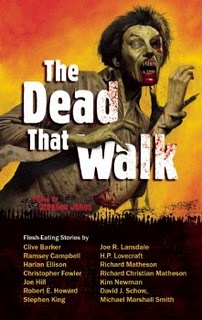
Review: The Dead That Walk

Ed. Stephen Jones, 2010, Scribo Australia


The release of any anthology edited by Stephen Jones is an event to be celebrated; the man knows his quality horror fiction, and consistently delivers the very best of the best. The Dead That Walk collects twenty-four tales of the walking dead - a mix of reprints and originals - including gems by Lovecraft, Ramsey Campbell, David J. Schow, Robert Shearman, Christopher Fowler, Nancy Holder, and Gary McMahon, to name just a few of my favourites. The original tales are mostly top-notch, while the reprints are all recognised classics of the genre.

That said, my one issue with this anthology - and admittedly this may be an issue unique to those, like myself, who read far too much zombie fiction - was that, with so many top-notch zombie reprint anthologies released over the past couple of years, most of the reprints in The Dead That Walk were already overly-familiar to me; the result being that I ended up reading perhaps half the anthology, and felt somewhat cheated as a result.

Don't get me wrong: this is an anthology worth buying (and hey! another zombie antho that's actually available in Australia!), but perhaps it's also an indicator that publishers and editors should give zombie reprints a rest, and concentrate upon commissioning more original work (as was done with Christopher Golden's recent Zombie anthology).

Review: Zombie Holocaust:How the Living Dead Devoured Pop Culture

How the Living Dead Devoured Pop Culture

David Flint, 2009, Cromwell Press

Zombie Holocaust is an illustrated history of the living dead and their fluctuating and evolving importance (and periodic reinvention) in western culture. With chapters devoted to movies, TV, literature, comics, games, toys, music and the Internet, plus sidetracks into 'almost-zombie' territory (mummies, revenants and pod people), this book provides an engrossing and comfortably-readable insight (due in no small part to the author's easy humour and often unique personal takes on various 'sacred cows' of the genre) into how and why the zombie has so effectively infiltrated modern pop culture.

Although the current and continual flood of zombie-related products will undoubtedly necessitate an updated edition of this book sooner rather than later, Zombie Holocaust is a volume that all self-respecting zombophiles should have on their bookshelf.

Review: The Undead: Zombie Anthology

Permuted Press, 2005, ed. D. L. Snell & Elijah Hall


Permuted Press is a U.S small press that in the past has dedicated itself almost entirely to zombie fiction, which - in my book - is extremely cool. However, despite my being a vocal fan of both small press and zombies, it’s taken me a while to pick up a copy of this anthology: I’ve recently read so much bad U.S small press horror (by virtue of the U.S small press market being so vast – see Sturgeon’s Law) that my expectations of such a specialised small press offering were extremely low, to say the least.

Well, I’m delighted to say that this anthology is great fun to read, and will undoubtedly please most fans of Romero-esque zombies.

Of course, that last comment brings me directly to my only major criticism of the anthology: the tales herein revolve exclusively around the variety of flesh-eating zombie beloved of film-maker George Romero. Not that there’s anything wrong with that in itself. I, like many others, am a huge fan of the so-called ‘Pittsburgh’ zombies, and this is the market that the anthology is aimed at. Having said that, however, this narrowing of the field (which ignores zombies from voodoo, EC Comics and other backgrounds) does make for an anthology in which many of the stories achieve a slightly bland ‘sameness’. This is not to say that the quality of the individual stories is poor: barring a couple of notable exceptions which read like poorly-edited fan fiction, most of the tales are well-written, engaging, and – yes – frightening. However, the subject matter – not to mention the original movies from which these tales have in part been drawn, and which therefore set certain specific expectations for readers – seriously restricts the creativity of the authors. By the time I’d finished the fourth 'survivor-of-apocalyptic-zombie-uprising-struggles-to-cope' story, I was beginning to feel that each piece – regardless of its strengths – was really just readdressing specific elements of the various Romero flicks. Aside from introducing a certain degree of blandness, this also gave some of the stories a ‘vignette’ feel, as though they were supposed to be part of some larger work (this is almost literally true in the case of David Wellington’s ‘Chuy and the Fish’ and David Moody’s ‘Home’, which are both set in the worlds of those authors’ respective previously-published zombie novels). This may also be down to the originating material, as the Romero movies deal with zombies on an epic scale, and allow for levels of emotional and plot development that shorter forms simply can’t achieve.

Of course, it’s unlikely that the restrictions I’ve mentioned will worry die-hard P-zombie fans, but anyone looking for a slightly broader range may be slightly disappointed. That said, even the ‘same-old’ stories were for the most part enjoyable, and those that strove for something more were often outstanding.

And so: the highlights.

‘Hotline’, by Russell A. Calhoun, is a neat little story about a zombie clean-up squad, with a twist in the tale that takes the reader instantly from ‘same-old’ territory to somewhere much nastier. To say more than this would give too much away.

Meghan Juraldo’s ‘Dead World’ turns the standard zombie apocalypse scenario on its head by presenting from the zombie’s point-of-view. It’s a darkly humorous piece that doesn’t necessarily offer any definitive answers to the oft-asked questions (Why do they come back? Why eat human flesh?), but gets full marks for tackling them from the other side of the fence.

‘13 Ways of Looking at the Living Dead’, by David Pape, is a rather beautifully poetic collection of vignettes that do exactly what the title suggests. Purportedly collected by a ‘survivor’ in an effort to explain the zombie phenomenon, the various pieces tackle the themes of life, death, loss, desire, and even nekkid girls in horror movies, in a style that alternates between clinical and emotional. A very impressive offering.

David Dunwoody’s ‘Grinning Samuel’ revolves around a very ‘different’ P-zombie, whose chief desires – despite his obvious predilection for carnage – are somewhat more practical than usual. An intriguing mixture of horror, steampunk and action (with a touch of New Weird), this story defeats reader expectations at every turn. I can only pray that Dunwoody turns his talents to penning a complete novel set in Samuel’s world – this is one of the best zombie tales I’ve ever read, and I want more!

‘Undead Prometheus’, by Rob Morganbesser, puts an interesting spin not upon the zombies in his tale, but upon the chief protagonist, a well-known figure drawn from horror literature (and if the title doesn’t give it away, you haven’t read the classics!). Taking Romero’s proclamation ‘They’re us’ and examining it from the point-of-view of someone who is neither ‘us’ nor ‘them’, this piece doesn’t necessarily offer anything startlingly new, but at least changes the window-dressing in a manner that generates interest.

Andre Duza’s ‘Like Chicken for Deadfucks’ (which actually is lifted from a larger work, but nonetheless stands exceptionally well on its own) depicts a future noir in which electrified fences keep the zombies at bay, as they would any other urban annoyance, allowing the cops and citizens of the big city to concern themselves with the far nastier problems occurring on this side of the barriers. An exciting blend of action, cyberpunk and horror, this story simultaneously concludes the anthology and points the zombie menace off into new directions.

All in all, this is an extremely enjoyable anthology, with good content and decent production values. Definitely worth owning if you’re a fan of zombies in film or fiction.

Review: Virus (aka The Missing)

Sarah Langan, 2007, Headline Publishing Group


When school troublemaker James Walker doesn’t get back on the bus after a school excursion, the quiet town of Corpus Christi unites to look for him. However, by the time James emerges from the woods surrounding the town, he has changed. And in his wake, everything else will change as well…

Virus (entitled The Missing in overseas release) was the most recent winner of the Stoker Award for best novel, and deservedly so. Langan takes various familiar horror themes and current social terrors – pandemics, zombies, possession, small-town insularity, etc - and combines them to create something frighteningly original.

Some absolutely superb characterisation complements an extremely nasty plot. The reader gets right inside the heads of even the most disposable characters, discovers what makes them tick, becomes attached to them, and then – all too often – watches them die in the most horrific manner imaginable. There are no absolute good or bad ‘guys’ here – everyone is composed of varying shades of grey. Nice folks don’t always do nice things, and vice-versa. Also, Langan is extremely good at defeating expectations; it’s almost impossible to guess which characters will live, die, or…change, which certainly adds to the tension, and gives the novel an unpleasantly realistic feel. Even the origins of the titular horror are kept deliberately obscure until the final moments, though there are numerous hints dropped along the way - which will probably lead you off in absolutely the wrong direction.

I’m going to go out on a limb here and state for the record that not only is this one of the best horror novels I’ve read this year, it’s also probably one of the five best horror novels I’ve ever read. Virus is guaranteed to creep you out, and is a must-read for horror aficionados.

Review: The Undead Vol 2: Skin & Bones

Ed. D. L. Snell & Travis Adkins, Permuted Press, 2007


Skin and Bones is the second of a series of zombie-themed anthologies from Permuted Press, a U.S. small-press publisher specialising in apocalyptic and zombie fiction. Regular HorrorScope readers might recall my review of the first anthology in this series, in which I suggested that publication – while an extremely worthwhile read – did suffer as a result of many of the stories included being extremely similar, most being obvious homages to George Romero’s zombie movies.

Well, I’m extremely happy to report that the editors have hit their stride with this second anthology, and everything about the publication – from the hideously wonderful cover art, to the range and scope of the stories therein – reflects this. There are still plenty of Romero-esque zombies, sure, but mostly presented from new perspectives, and with new twists and turns to keep them fresh (so to speak!); there are futuristic zombies, prehistoric zombies, zombies born through voodoo, and Indian witchcraft, and fungal infestations; there are humorous zombies, tragic zombies and downright frightening zombies. There are even zombie tales that don’t appear to feature zombies at all. Except that they do. Sort of. Trust me, you’ll have to read the anthology to see what I mean.

As is always the case with an anthology of this quality, I found it difficult to pick any standout pieces. I will, however, single out a few personal favourites:

David Dunwoody’s ‘The Abbot and the Dragon’ is a clever little science-fantasy/horror tale, with a number of fresh twists on several well-worn genre tropes. To say any more would give away too much. So I won’t.

‘Something Fishy This Way Comes’, by Joel A. Sutherland, is a wonderfully comic take on the zombie apocalypse, suggesting that there are far worse things that a zombie might want than eat your flesh. And no, it’s not what you’re thinking.

Eric Shapiro’s ‘The Hill’ is a chiller that, at first glance, appears to have nothing to do with zombies at all. However, the author has taken the tropes of the zombie apocalypse – fear, isolation, an unexplained and almost nonsensical foe – and created something fresh and unique. Okay – no walking dead, but this tale definitely belongs in this anthology.

‘The Traumatized Generation’, by Murray Leeder, posits how a zombie-besieged society might attempt to cope with the social and psychological ramifications upon our younger citizens. And, as always, the government gets it horribly wrong. A very nasty little tale indeed.

There’s also a full novella, ‘Skin and Bones’, by co-editor D. L. Snell, which draws from both voodoo and Night of the Creeps to achieve some extremely effective chills and grue, plus an excerpt from Kim Paffenroth’s novel (also published by Permuted), Dying to Live. I usually ignore excepts from publishers’ ‘coming soon’ lists, but – again testifying to the tightening of the reins by the editors of this anthology – this excerpt stood well enough on its own to be included, and immediately made me want to run out and grab a copy of the novel.

If you haven’t already guessed, I’m giving this publication two thumbs up. Anyone with the slightest interest in zombies should read it, as should any general fan of well-written, engaging horror.

Review: The Undead Vol 3: Flesh Fest

Ed. D. L. Snell & Travis Adkins, Permuted Press, 2007


Flesh Fest is the third in a series of zombie-themed anthologies from Permuted Press, a U.S. small-press publisher specialising in apocalyptic and zombie fiction. With this volume, series editors Snell and Adkins continue to showcase their eye for excellent zombie fiction with fifteen themed tales, all well-crafted, and most approaching the zombie phenomenon from fresh perspectives.

Again, difficult to pick the standouts from such an overall-brilliant anthology, but here’s a list of personal favourites:

Matthew Masucci’s ‘Adam Repentant’ offers a zombie uprising of the biblical kind, and from an unexpected source. Some deft reimagining of Biblical fables results in a tight, atmospheric and engaging tale.

Rick Moore’s ‘Basic Training’ is a frankly horrific take on the manner in which ordinary, decent folk might evolve (or devolve) psychologically in order to deal with the unbearable. Wonderfully written, but not for the faint-hearted or easily offended.

‘Killing the Witch’, by A. C. Wise, presents us with a zombie fairy-tale – specifically, a dark retelling of The Wonderful Wizard of Oz. Unique, lyrical and unsettling, this is a great example of the broad scope available to authors of zombie fiction when they allow their imaginations to run free.

Scott Standridge’s ‘If You Believe’ is a chilling tale that may have you blocking up your chimney this Christmas. It begins gruesomely, and gets worse. Ramsey Campbell would appreciate the sense of dread with which the author manages to imbue one of our beloved festive icons.

‘The Legend of Black Betty’, by Tim Curran, is undoubtedly the masterpiece of this anthology. Curran, whose work usually falls into the Lovecraftian camp, has here produced one of the most genuinely frightening horror stories I’ve read in quite a while. The mix of Old West and zombies in fiction is certainly not new, but the sheer sense of terror achieved – largely through use of the 'campfire' mode of storytelling, with one character relating much of the tale to another – raises the piece well above the same-old.

And, parochial as this may make me, it’s nice to see local lad Steven Cavanagh get a guernsey in this publication, his brutal tale ‘Street Smarts’ being first cab off the rank.

As with volume two of this series, I would highly recommend this anthology to all fans of zombie fiction, as well as to fans of horror in general. If Permuted Press continues to publish anthologies of this caliber, I may have to find a whole new range of superlatives with which to describe future releases.